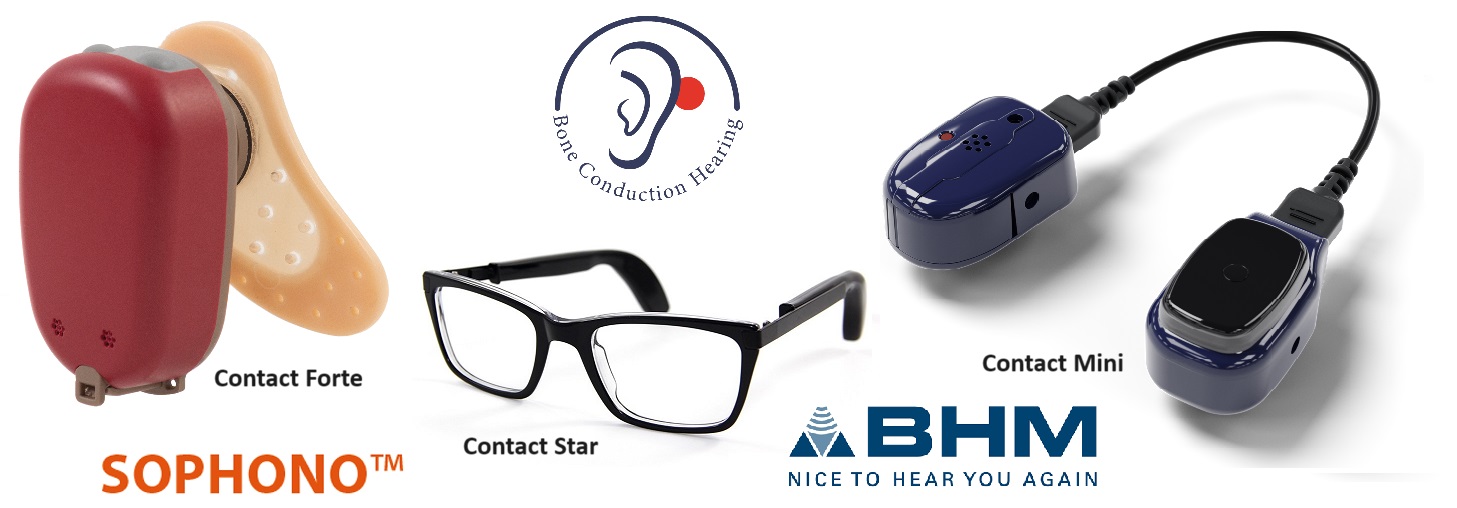

Contact Star EVO 1 Spectacle based Bone Conduction Hearing Device

Carla (name changed) age9 yearss, was referred to us by one of our satisfied customers.

Carla has bilateral atresia, with Normal Bone Conduction hearing in both ears.

For the last two years, they have been going to various clinicians but most of them advised them to go for surgical options, which they did not want to opt for. And some others gave them non-surgical options which she refused as she did not prefer to wear bands. Her parents said that the bands were neither covered under insurance nor they were not affordable.

In her words- ” With Headbands, I feel every time that something is crushing my head which makes me very uncomfortable.”

Carla was given an option of Contact Star EVO 1, which she tried for a week and came back with the response that this was what she was looking for.

For over a year Carla has been using Contact Star EVO Spectacle Bone Conduction Device, Carla is now more confident. Carla is no longer hesitant while communicating with friends and family. There is a tremendous improvement in the clarity and fluency of her speech.

Contact Star EVO1 Non-Surgical Spectacle Bone Conduction Hearing Device can be used for:

a) Conductive Hearing Loss

b) Mixed Hearing Loss

c) Single-Sided Deafness

It comes with fully automated situation recognition sound dynamics (BHM automatic) and in-situ Audiometry for fully programmable customized fittings.

A huge variety of fitting options with designer glasses is available with the greatest degree of comfort and aesthetics. To find out more fitting options for Contact Star Evo1 visit: https://boneconductionhearing.com/glasses-accessories

Bone Conduction Hearing Aid Contact Star
Contact Star Evo1

With Contact Star Evo1 you can enjoy comprehensive hearing with a device tailored to your hearing and aesthetics needs. Furthermore, bone-conduction hearing glasses are an excellent alternative to costly and complex implanted devices.

To try CONTACT STAR EVO1 with your clients write to us at: contact@boneconductionhearing.com

Designer, comfortable, inconspicuous BHM Bone Conduction HeadBand

Sherin (name changed) came to us at the age of 1 year with Bilateral Anotia. Her parents were worried about her hearing loss as most of the time until it is very loud, she tends to not hear the sounds around her. Her cute smiling face was based upon the facial expressions she could comprehend.

After doing Bone Conduction ABR we found her to have Normal hearing through Bone Conduction. This brought comfort to the face professional, who advised not to worry as we can bring her hearing back to Normal and she will be able to hear sounds, respond, and develop like a Normal Hearing Child. This brought comfort and a smile to the faces of parents.

Both parents were counseled extensively about hearing, hearing pathways, and the solutions available. As at the age of 1 year surgery was not an option, we decided to opt for the BHM Contact Mini Soft Band Bilateral Bone Conduction Device.

That brought some hope to the parents, as for both parents it was a nightmare to run from pillar to post, and were told a lot of options that were confusing and were not in their financial capacity.

BHM Contact Mini as being a more designer, user-friendly, and cost-effective solution now making Sherin hear normal. Now the next target for the parents is the reconstruction of the pinna in the future as soon as it is possible.

Contact Mini is an ideal solution for the Pediatric and Adult population with conductive or Mixed Hearing Loss or with Single-Sided Deafness.

The cost-effective devices are the solution even for patients who are either not eligible for insurance or getting their claim rejected by Insurance.

Multiple wearing options include Headband, Soft Band, or Cap making it almost invisible and increasing confidence in wearing. Even one has the option to design their own soft bands. For more accessories and options visit the website: https://boneconductionhearing.com/contact-mini

Here are some benefits of selecting BHM Contact Mini over Surgical Options:

For more details or queries write to us at contact@boneconductionhearing.com

Understanding Bone Conduction Hearing Loss and Management with bone conduction hearing devices

The term Bone Conduction Hearing is widely used now, whenever we hear this, we understand it by the name of the transmission of sound through bones.

Ear Image for Bone Conduction Hearing
Ear Anatomy

Let’s try to understand the term from a wider perspective on how it works, causes, how it affects the lives of individuals, and the solution to it. In the first blog we will be covering an overview of it, but later will go into extensive details.

Ear as organ if the hearing is divided into three regions:

a) Outer Ear (works as a collector of sound)

b) Middle Ear (works as a transmitter of sound)

c) Inner Ear (works as a sensor for sounds, changes the sound from acoustic to electric)

Normally the sound is collected by Pinna through the internal auditory canal before transmitting the sound to the eardrum the collective effect of the head, pinna, and the ear canal is that the sounds are amplified by 10 to 15dB in 2000 to 4000Hz region. The sensitivity to the sound is highest in this frequency region.

The eardrum works as a wall between the outer ear and the middle ear and separates the two. The eardrum vibrates in response to the sound waves transmitted through the ear canal, creating vibrations in the eardrum.

These vibrations are then transmitted through a chain of bones i.e. Malleus, Incus, and Stapes. Stapes are even known to be the smallest bone in the human body. The transmission enhances the acoustic transfer in the ear, we can understand it by one fact if the transmission of sound is not done through the bones it can give a hearing loss up to 30decibels(dB).

The In and Out pushing of the bone chain creates pressure changes in inner ear fluids, which stimulates the inner ear structures i.e. hair cells, they convert the acoustic signals to neural impulses. These neural impulses are further transmitted through the Auditory nerve to the brain, which further processes it and makes us hear the sounds.

In all this, there is one more very important organ that is part of the middle ear the Eustachian tube, which is connected to the middle ear through nasal air passages. The eustachian tube operates like a valve helping to equalize the pressure on either side of the eardrum. The easiest and most common way to understand it is when we are flying in airplanes we feel the eardrum getting pulled which gets better with swallowing, as with swallowing we maintain the air pressure inside and outside of the eardrum.

Without a normal Eustachian tube function there is a reduction in efficiency of the middle ear, resulting in reduced acoustic energy transfer to the inner ear.

Causes:

There are various causes due to which one can have a loss of transmission of sound in the outer and middle ear which is called Conductive Hearing loss.

Possible causes:

* Aural Atresia

* Microtia

* Acute or Serous Otitis Media

* Chronic Suppurative Otitis Media

* Otitis Externa

* Otosclerosis

* Cholesteatoma

* Other Ossicular diseases

* Traumatic Injury to Middle Ear

* Perforated Eardrum

* Eustachian Tube Dysfunction

* Barotrauma

Conductive hearing loss makes all sounds seem faint or muffled. The hearing loss is usually worse at lower frequencies.

Symptoms:

* Muffled Hearing

* Sudden or steady loss of hearing

* Fullness or stuffy sensation in the ear

* Dizziness

* Draining of the ear

* Pain or tenderness in the ear

Management:

If you are experiencing hearing loss, you should first visit an ENT or otolaryngologist, who can make a specific diagnosis for you. It will involve a hearing test (audiogram) by an audiologist to determine the severity and type of hearing loss.

Based on the result the treatment option might include:

* Medical Treatment

* Surgery to address the cause

* Evaluation and fitting with Bone Conduction Hearing devices

Bone Conduction Hearing Devices There are several wearing options one can opt for:

Spectacle Devices

Soft Band

Head Band

Unlike Bone-anchored hearing devices that need surgery, we fit BHM Bone conduction hearing aids without surgery.